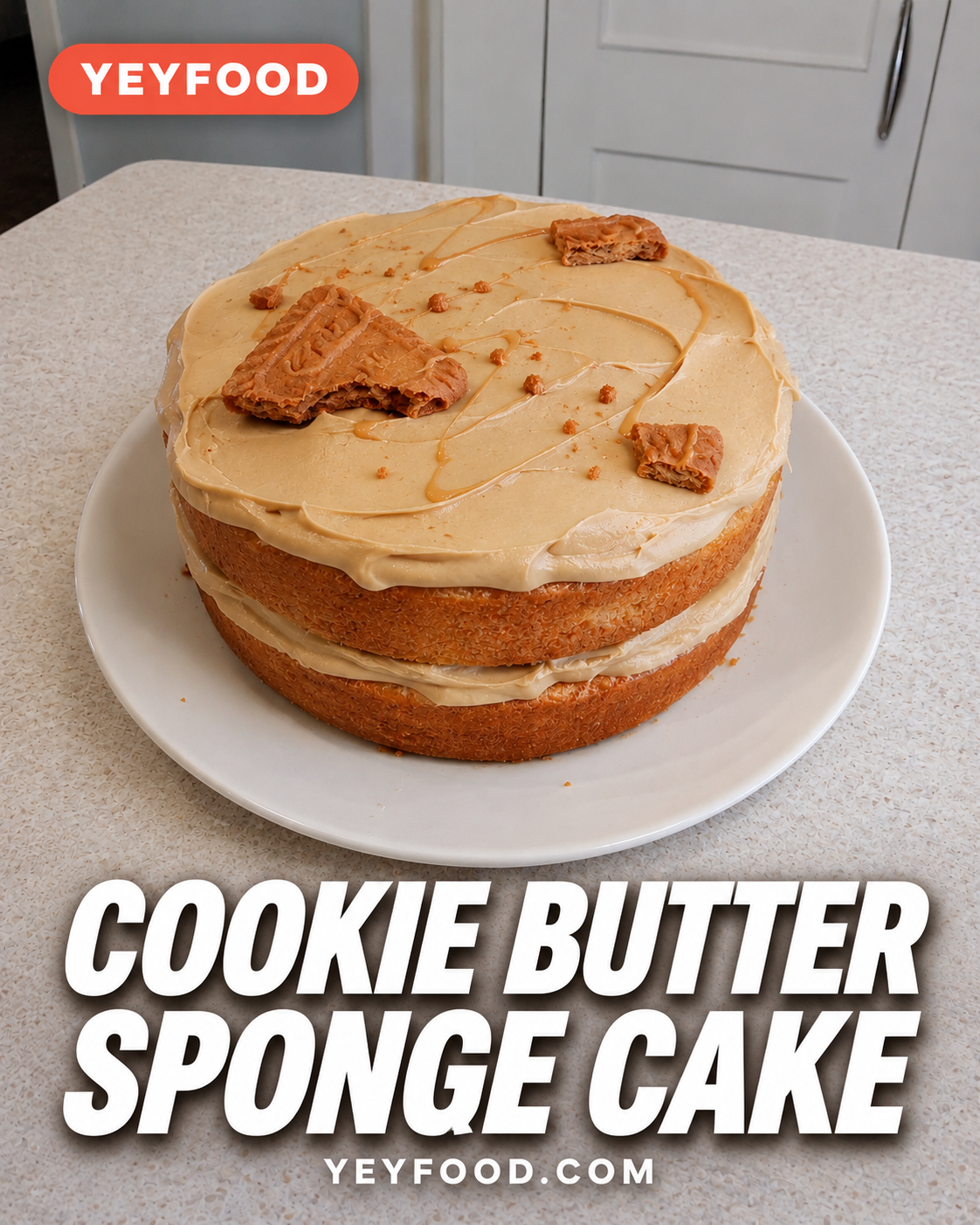
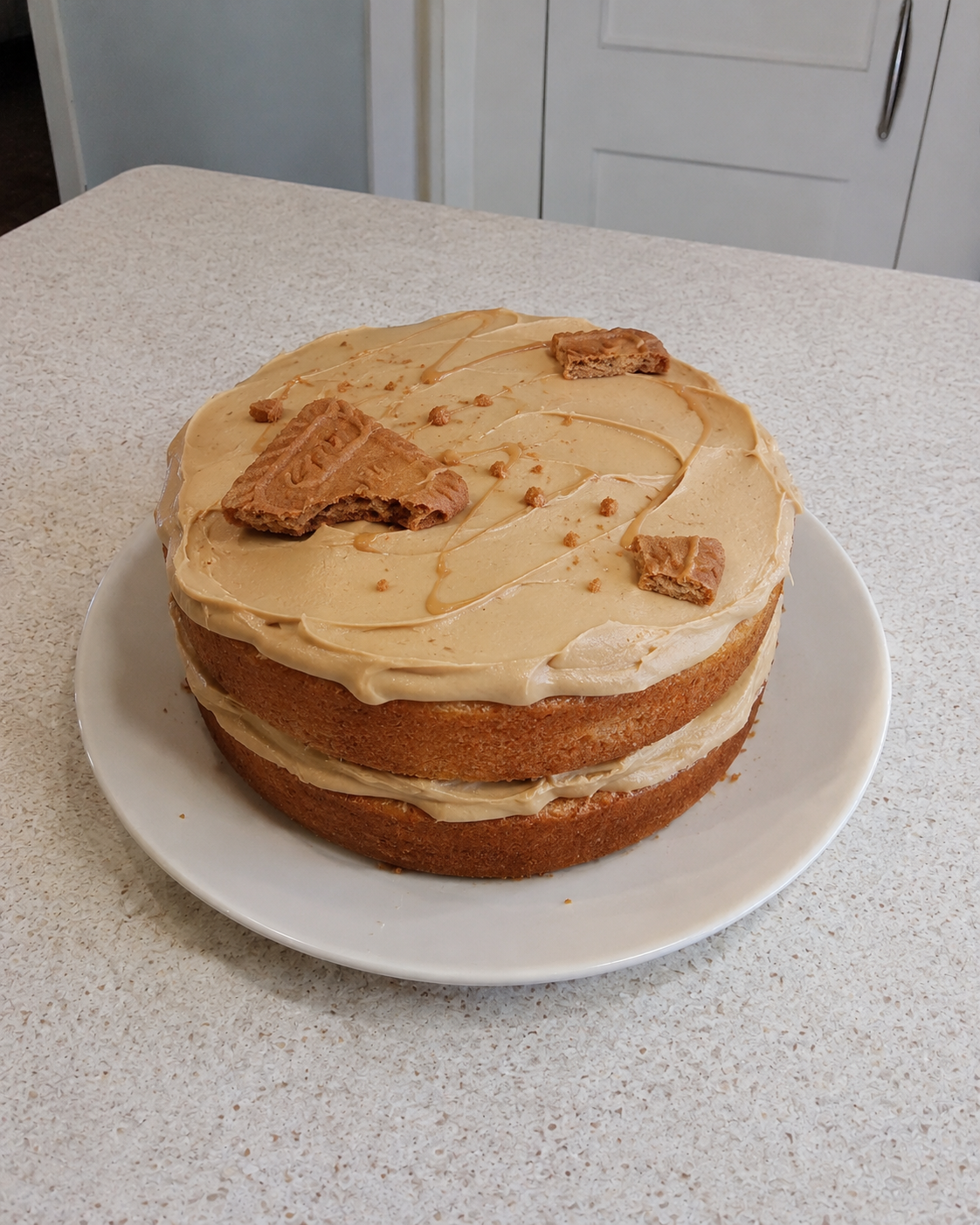
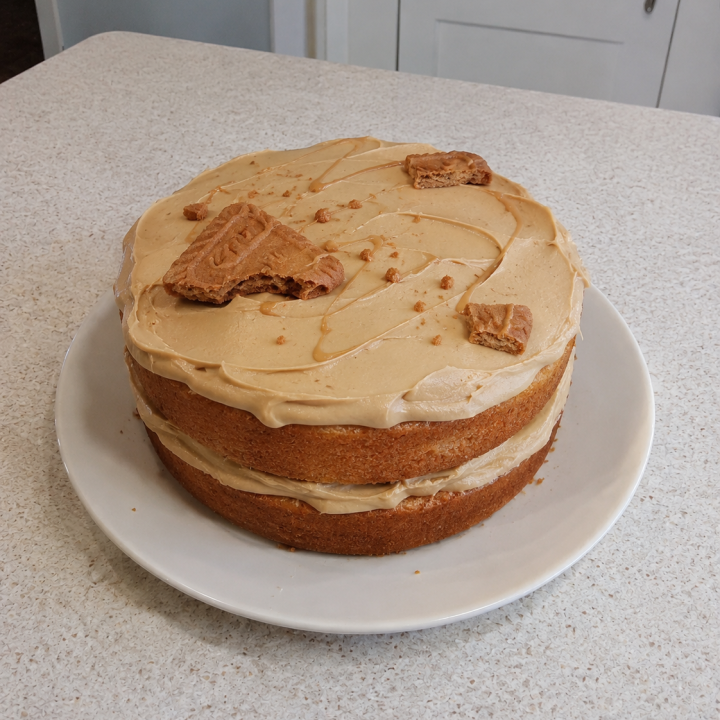
Cookie butter belongs in more than a spoonful straight from the jar. Here it gives a brown-sugar sponge its warm, caramelized-biscuit flavor, then turns up again in the buttercream between the layers. The finish is deliberately simple: a loose drizzle, a few biscuit crumbs and pieces of crunchy speculoos on top.
This is a butter-based sponge, rather than a fat-free whisked-egg cake. Two separate pans help the layers bake evenly, and leaving the sides unfrosted makes it an approachable cake to assemble without a turntable or piping bag. Allow the afternoon, not because the mixing takes long, but because warm cake and buttercream do not get along.
Choosing the cookie butter
Use a smooth speculoos-style cookie spread, such as Biscoff. It is made from spiced cookies and is not interchangeable with ordinary butter, peanut butter or a jar of caramel sauce. Stir the jar if the contents have separated. The spread should be at room temperature for the batter and frosting; only the small portion for the final drizzle needs warming.
The cake uses 435 grams of spread altogether, so check the jar size before shopping. You will also need 525 grams of unsalted butter across the sponge and frosting. Keep the two portions separate to avoid accidentally adding the frosting butter to the cake bowl.
What you need
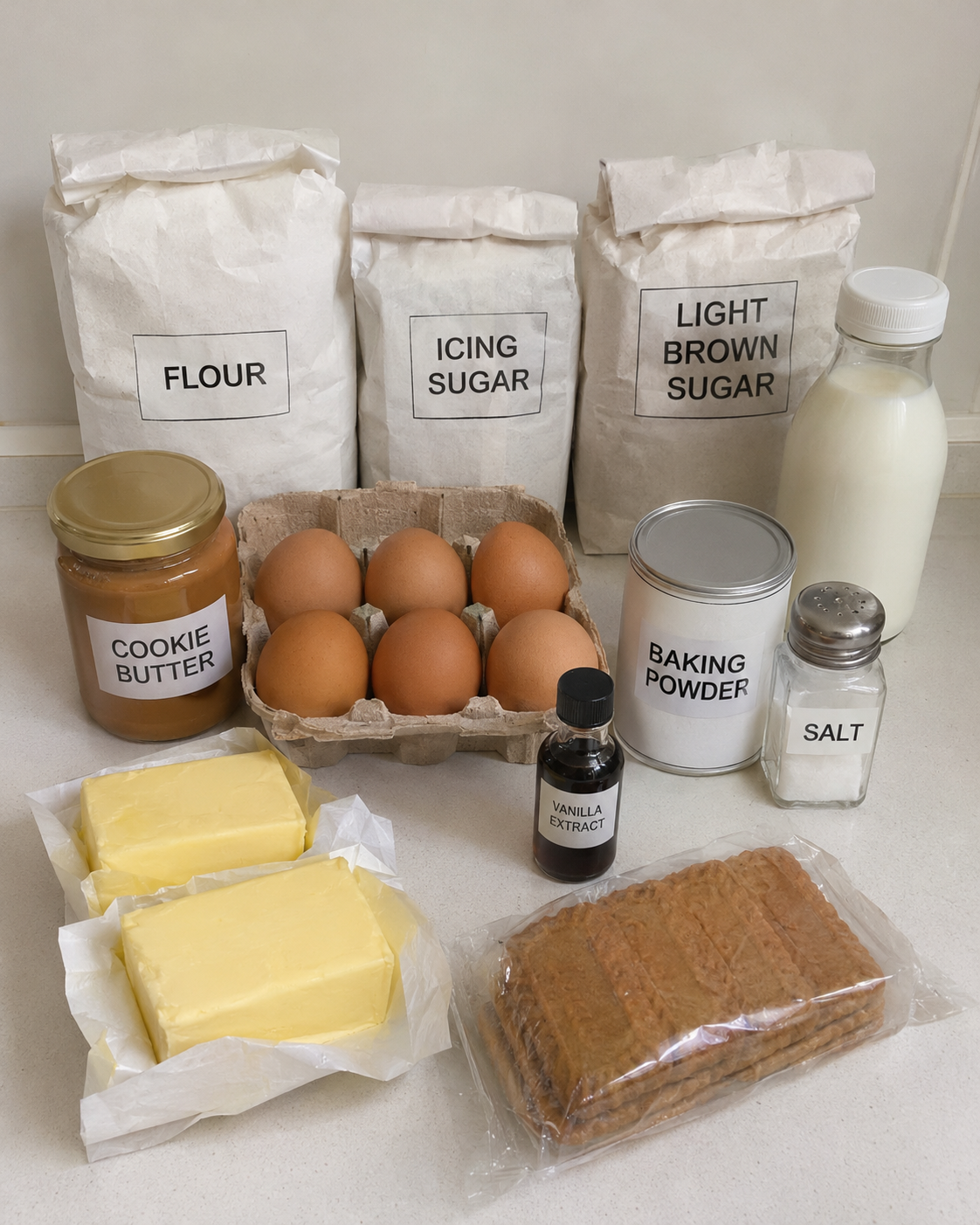
A kitchen scale is particularly useful here. The weights below avoid the variation that comes from packing brown sugar or scooping flour. Use two 8-inch round cake pans at least 2 inches deep, parchment paper, an electric mixer, a spatula and a cooling rack.
For the sponge
- 325 g unsalted butter, softened
- 325 g light brown sugar
- 150 g smooth cookie butter
- 6 large US eggs, at room temperature
- 1 tablespoon milk
- 1 teaspoon vanilla extract
- 325 g all-purpose flour
- 3¼ teaspoons baking powder
- ¼ teaspoon fine salt
For the filling and top
- 200 g unsalted butter, softened
- 400 g powdered sugar, sifted if lumpy
- 250 g smooth cookie butter
- 2–3 tablespoons milk, added as needed
- 35 g cookie butter for drizzling
- Up to 6 speculoos cookies, halved, plus 2 cookies crushed; use pieces to taste
Use all-purpose flour with the baking powder listed here, not self-rising flour plus extra raising agent. Softened butter should yield to a finger but should not be shiny or partly melted. Take the eggs out while you prepare the pans so the mixture is less likely to curdle.
Mixing and baking the layers
Heat the oven to 350°F conventional (160°C fan). Grease the pans and line their bases. Cream the sponge butter and brown sugar until noticeably lighter, about 3–4 minutes, then mix in the cookie butter. Beat in the eggs one at a time, scraping down the bowl, followed by the milk and vanilla.
Whisk the flour, baking powder and salt separately, then fold them into the batter just until no dry pockets remain. Divide between the prepared pans and level gently. Bake for 35–40 minutes, checking toward the end: the centers should spring back lightly and a skewer should come out without wet batter. Oven timing varies, so use those signs as well as the clock.
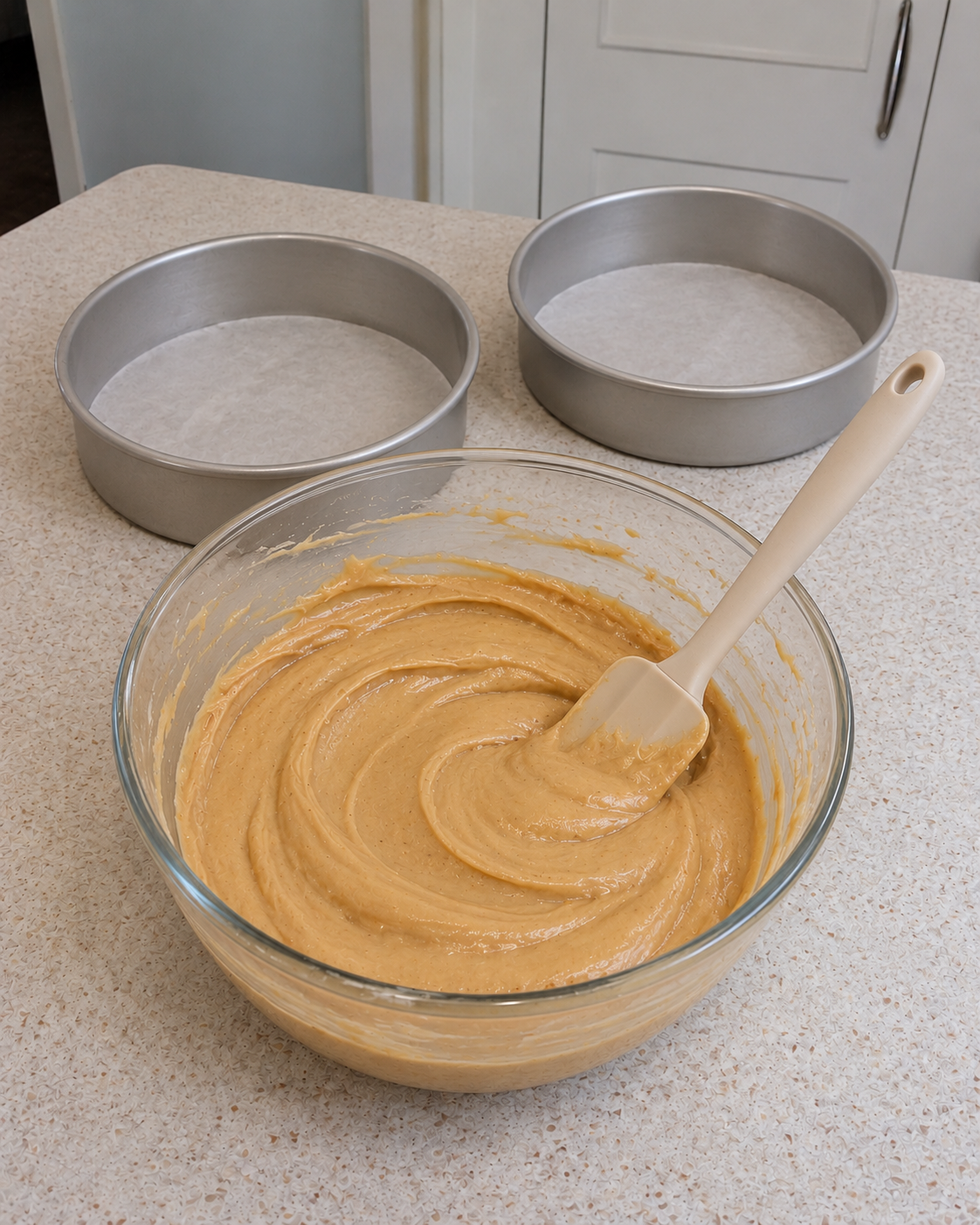
Leave the cakes in their pans for 10 minutes, then carefully turn them onto racks, peel away the paper and cool completely. Give them roughly two hours. If the tops have a pronounced dome, trim only enough to give the upper layer a stable place to sit. Do not press down on the cake to flatten it.
A simple cookie butter finish
Beat the frosting butter until smooth. Add the powdered sugar gradually on low speed, then mix in the cookie butter. Add milk a tablespoon at a time until it spreads without dragging crumbs from the cake. The frosting should hold soft swirls, not run down the sides.
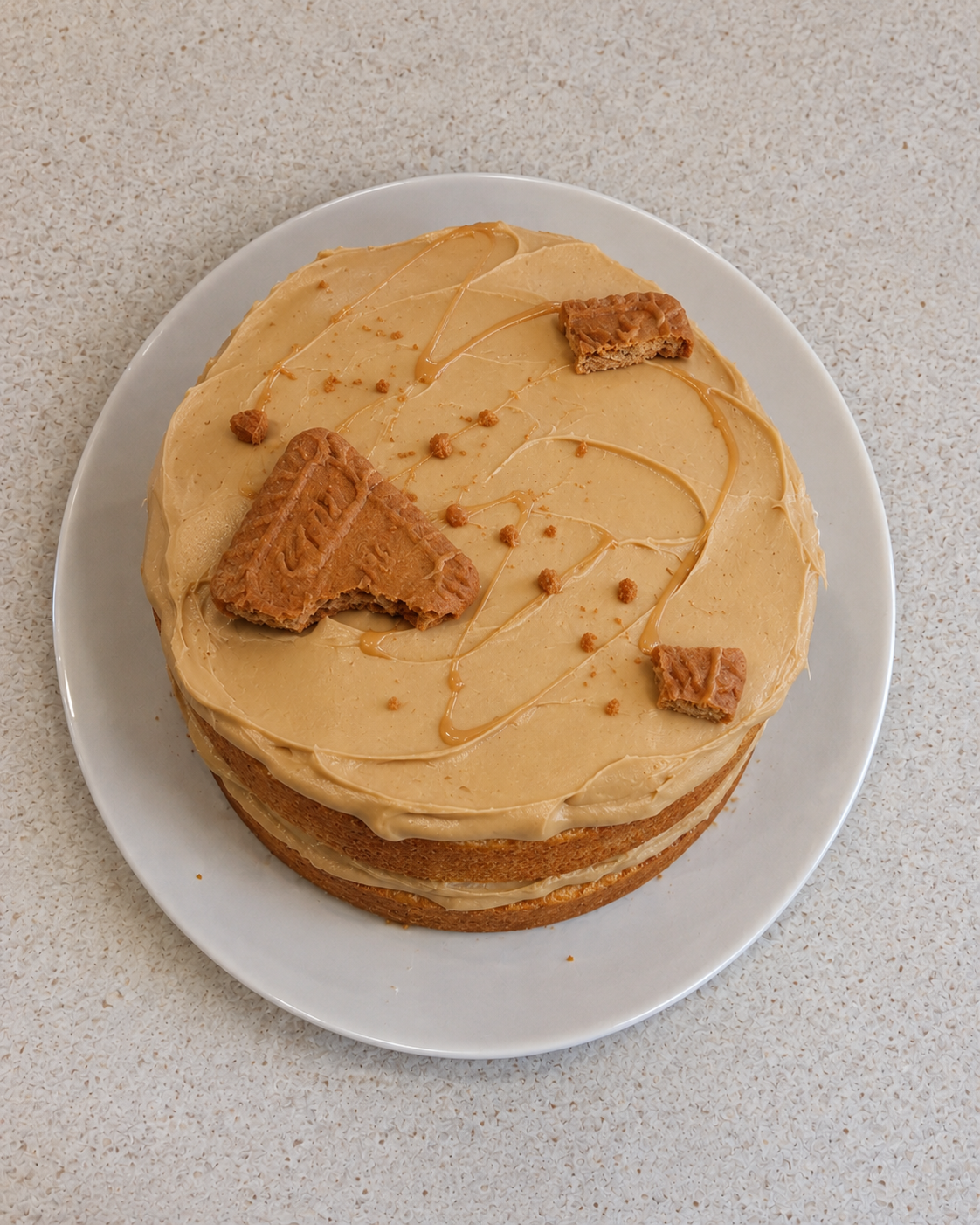
Set one cooled layer on a plate and spread over half the buttercream. Add the second layer and spread the rest over its top, leaving the cake edges visible. Warm the 35 grams of cookie butter in brief microwave bursts, stirring between them, just until it flows from a spoon. Let it cool to barely warm before drizzling. Finish with the crumbs and biscuit pieces close to serving time so they keep more of their crunch.
Serving and planning ahead
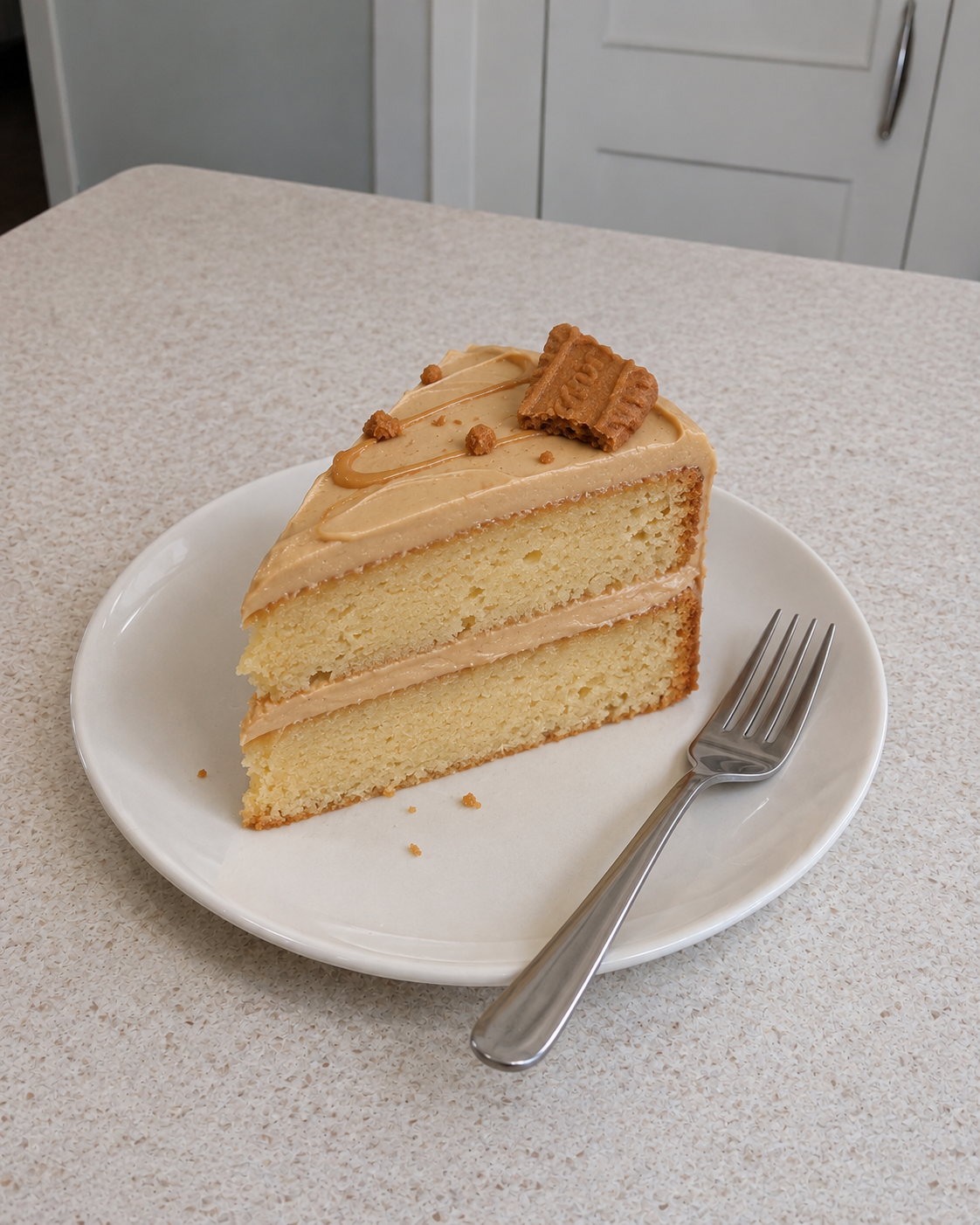
This is a rich cake, so cut it into 16 modest slices. A sharp knife wiped between cuts keeps the filling from smearing across the sponge. Coffee or unsweetened tea makes a good partner; extra sauce is not necessary.
Keep the cake covered in a cool room for up to two days, or refrigerate for up to four days if the kitchen is warm. Let refrigerated slices lose their chill before eating so the butter-based sponge and frosting soften. For a head start, wrap completely cooled, undecorated layers well and freeze for up to two months. Thaw wrapped before filling. Add the cookie decorations last.
Contains wheat, milk and eggs; check the spread and biscuit labels for other allergens. The recipe is adapted from The Baking Explorer’s Biscoff cake, with all-purpose flour and separately measured raising agent, vanilla, and a simple spread-on finish.
Cookie Butter Sponge Cake
A two-layer brown sugar sponge with cookie butter in the batter, creamy cookie butter frosting and a simple biscuit topping.
Ingredients
- For the sponge
- 325 g unsalted butter, softened
- 325 g light brown sugar
- 150 g smooth cookie butter
- 6 large US eggs, at room temperature
- 1 tablespoon milk
- 1 teaspoon vanilla extract
- 325 g all-purpose flour
- 3 1/4 teaspoons baking powder
- 1/4 teaspoon fine salt
- For the buttercream
- 200 g unsalted butter, softened
- 400 g powdered sugar, sifted
- 250 g smooth cookie butter
- 2–3 tablespoons milk, as needed
- For the topping
- 35 g smooth cookie butter, warmed until just pourable
- Up to 6 speculoos cookies, halved, plus 2 crushed; use pieces to taste
Instructions
Heat the oven to 350°F (160°C fan). Grease two 8-inch round cake pans at least 2 inches deep and line their bases with parchment.
Beat the softened butter and brown sugar for 3–4 minutes until lighter and fluffy. Beat in the cookie butter. Add the eggs one at a time, mixing after each, then add the milk and vanilla.
Whisk the flour, baking powder and salt in another bowl. Fold into the wet mixture just until no dry flour remains; avoid prolonged mixing. Divide evenly between the prepared pans and level the tops.
Bake for 35–40 minutes, until the tops spring back lightly and a skewer inserted into the centers comes out clean. Cool in the pans for 10 minutes, then turn onto racks and cool completely, allowing about 2 hours.
For the buttercream, beat the softened butter until smooth. Add the powdered sugar gradually on low speed, then beat in the cookie butter. Add the milk a little at a time until spreadable.
Set one cake layer on a serving plate and spread with half the frosting. Add the second layer and spread the remaining frosting over the top, leaving the sides exposed. Drizzle with the warmed cookie butter. Add biscuit halves and crumbs shortly before serving.
Notes
Use smooth cookie butter rather than crunchy spread. Measure the flour by weight for consistency; this version uses all-purpose flour plus baking powder, not self-rising flour. Cool both layers completely before frosting. Keep the cake covered in a cool room for up to 2 days or refrigerate for up to 4 days; bring individual slices toward room temperature before serving. Wrap unfrosted layers well and freeze for up to 2 months. Add the biscuits near serving time so they retain their crunch.
More recipes from us
If you enjoyed this recipe, please share it on your social media! I would love for more people to try this delicious and easy-to-make recipe. If you have any questions or feedback, please feel free to leave a comment below. I would love to hear from you! Shhh… Join our secret foodie group on Facebook